Silicon-Carbon Batteries in 2026 Smartphones: More Capacity, Slimmer Bodies and the Real Risks of Wear
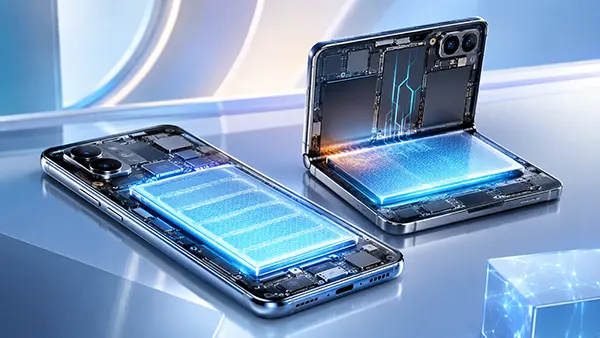
Silicon-carbon batteries have moved from an unusual specification to one of the most important smartphone developments of 2026. They are still lithium-ion batteries, but their anodes contain a carefully engineered mixture of silicon and carbon rather than relying almost entirely on graphite. This change allows manufacturers to store more energy in a limited internal space, which is why recent phones can combine batteries above 6,000 or even 7,000mAh with bodies that remain relatively slim. The technology is particularly valuable in foldables, where the hinge, two displays and camera hardware compete for every millimetre of room. Yet larger capacity does not automatically guarantee better long-term ownership. Silicon expands during charging, battery temperature still matters, and the quality of the cell, charging system and software controls can be more important than the number printed on a specification sheet.
Why Silicon-Carbon Batteries Became Important in 2026
For years, smartphone battery improvements came mainly from more efficient processors, adaptive displays and better power-management software. Conventional graphite-based cells also improved, but their energy density was advancing too slowly to support the combination buyers increasingly expected: brighter screens, stronger cameras, intensive artificial-intelligence features, fast mobile connectivity and long endurance in a thin body. Making the battery physically larger could extend runtime, but it also increased weight and thickness. Silicon-carbon anodes offered a more practical route because silicon can hold considerably more lithium than graphite at material level. In a commercial phone battery, manufacturers do not normally replace all graphite with silicon. They introduce a controlled proportion of silicon into a carbon structure, gaining useful extra capacity while trying to contain expansion and preserve stability.
The change is visible in current products rather than laboratory prototypes. The global OnePlus 15 combines a 7,300mAh dual-cell battery with a body about 8.1 to 8.2mm thick, while the realme GT 7 uses a 7,000mAh battery and an anode containing 10 per cent silicon. Foldable design shows the space advantage even more clearly. HONOR states that the Magic V6 uses a fifth-generation silicon-carbon battery with roughly 25 per cent silicon, a capacity of 6,660mAh and an energy density of 921Wh/L. Its white version measures about 4.0mm when unfolded. These figures should not be compared without considering display size, processor efficiency and regional specifications, but they demonstrate how much more energy manufacturers can now place inside restricted dimensions.
This development also changes the priorities of phone design. A manufacturer can use the additional energy density in several ways: increase capacity without enlarging the body, reduce thickness while maintaining familiar endurance, or reserve space for cameras, cooling hardware and stronger structural components. Foldables benefit because each half of the device has severe space limits, while gaming phones can allocate more room to thermal control. Mainstream models gain a simpler advantage: less anxiety during travel, navigation, photography or long periods away from a charger. The result is not a single universal design formula. Silicon-carbon chemistry gives engineers more freedom, but the final balance still depends on the product category, intended lifespan, price and local certification requirements.
How the Chemistry Creates More Space for Designers
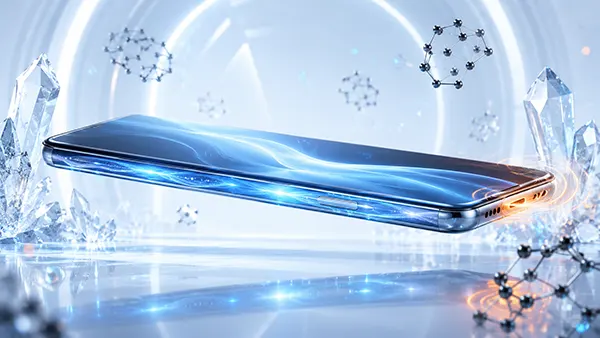
A smartphone battery stores lithium ions by moving them between the positive electrode and the anode during charging and use. Graphite has been the standard anode material because it is stable, predictable and relatively durable. Silicon can accept more lithium, so adding it raises the amount of charge that the anode can hold. The difficulty is that silicon changes volume far more than graphite as the battery cycles. Left unmanaged, repeated expansion and contraction can damage particles, disturb electrical contact and create fresh surfaces that react with the electrolyte. A silicon-carbon anode is designed to reduce these problems by surrounding or supporting silicon with conductive carbon, leaving microscopic room for movement and using binders, coatings and electrolyte additives that help the structure survive repeated charging.
The practical gain is better volumetric energy density: more watt-hours can fit into each litre of battery space. This is more meaningful than simply saying that silicon has a high theoretical capacity, because a phone contains packaging, separators, current collectors, safety components and other materials that do not store energy. Manufacturers also limit the silicon proportion to a level their cell design can manage. A higher percentage may increase capacity, but it can make expansion, first-cycle energy loss and long-term stability harder to control. This explains why one company may advertise 10 per cent silicon while another reaches 25 per cent. The figures describe different cell designs and should not be treated as a simple quality ranking.
Silicon-carbon technology does not turn a phone battery into a solid-state cell, nor does it remove the familiar characteristics of lithium-ion chemistry. The electrolyte, cathode and protective systems remain central to safety and ageing. What changes is the anode composition and the engineering needed around it. The greatest advantage is therefore evolutionary rather than magical: manufacturers can obtain a useful increase in stored energy without waiting for an entirely new battery system. By 2026, this is mature enough for mass-produced phones, but it is still developing quickly. New generations are increasing silicon content, improving internal structures and refining charging algorithms, so two devices described as using silicon-carbon batteries may differ substantially in density, cycle life and heat behaviour.
What Larger Capacities Change in Everyday Smartphone Use
The most obvious benefit is longer time between charges, although the real improvement depends on how the phone uses its energy. A 7,000mAh device can offer a substantial reserve for video recording, gaming, mapping and hotspot use, but a large bright display or an inefficient modem can consume that reserve quickly. Software also influences standby drain, background activity and refresh-rate control. For this reason, battery capacity should be considered together with independent endurance testing. Even so, a larger cell provides a valuable margin. Heavy use that previously required an afternoon top-up may fit within one day, while lighter users may charge every second day. Fewer charging sessions can also reduce the number of full equivalent cycles accumulated over time, partly offsetting concerns about the more demanding anode material.
Higher energy density can improve comfort as well as runtime. A phone does not need to become unusually thick merely because it carries a high-capacity battery, and foldables no longer have to accept very small cells as an unavoidable compromise. There are limits, however. A large battery still has mass, and phones above 7,000mAh may remain heavier than models built around smaller cells. Designers must also leave space for protection, cooling and controlled expansion throughout the product’s life. Extremely thin bodies can make heat dissipation more difficult, especially during fast charging, gaming or prolonged camera use. The best design is therefore not necessarily the thinnest one, but the model that uses its internal volume without creating excessive thermal stress.
Fast charging is often paired with silicon-carbon batteries, but the two features are not the same. The anode may support strong charging performance, yet headline wattage is only a peak figure reached under suitable conditions. Charging power normally falls as the battery fills or warms, and a well-calibrated control system may deliberately slow the process to protect the cell. Dual-cell arrangements can divide current and help manage charging rates, although capacity may then be expressed as an equivalent combined figure. Buyers should focus on the complete experience: time to a useful charge level, heat during the session, charger availability, wireless charging support and whether rapid charging remains consistent after months of use.
Why Capacity Figures Do Not Tell the Whole Story
Milliamp-hours are useful for comparing batteries that operate at similar voltages, but they are not a complete measure of stored energy. Watt-hours provide a more direct indication because they account for voltage as well as charge capacity. The OnePlus 15, for example, lists a typical equivalent capacity of 7,300mAh and typical energy of 27.6Wh. Other manufacturers may highlight only the larger mAh number, making direct comparisons less precise. Rated capacity and typical capacity are also different: the typical figure is an expected average, while the rated figure is the lower declared value used for formal specifications. Regional versions can vary because of certification, shipping, design or market decisions, so an imported phone may not match the battery advertised for another country.
Runtime is also shaped by the complete device. Processor efficiency, display brightness, refresh rate, signal strength, camera activity, background applications and ambient temperature all affect consumption. A phone with a smaller battery can sometimes outlast a larger-capacity rival in a particular test if its hardware and software are more economical. Conversely, a powerful device may use its extra capacity to maintain performance rather than achieve record endurance. Manufacturer playback figures are helpful for controlled comparisons within one brand, but they rarely reproduce a mixed day of calls, messaging, navigation, photography and mobile data. Independent tests using repeatable settings remain the most reliable way to judge whether a large silicon-carbon battery delivers a meaningful advantage.
Battery health information deserves similar caution. A percentage shown in the settings menu is an estimate produced by the battery-management system, not a laboratory measurement of every chemical change inside the cell. Calibration, temperature and usage patterns can influence the reading. A small early drop does not always mean rapid failure, while a stable displayed figure does not guarantee unchanged peak power. More useful signs include noticeably shorter runtime under the same routine, unexpected shutdowns, severe throttling, swelling or unusual heat. Swelling should be treated as a service issue rather than normal ageing. The phone should no longer be charged or pressed closed if the display or rear cover is lifting, and the battery should be inspected by a qualified repair provider.
The Real Risks: Ageing, Heat and Long-Term Reliability
The central engineering challenge is silicon expansion. During repeated cycles, expansion can crack active particles or the protective interphase that forms between the anode and electrolyte. When fresh surfaces are exposed, more electrolyte is consumed to rebuild that layer, increasing resistance and reducing the lithium available for normal operation. Carbon structures, flexible binders, protective coatings, carefully selected electrolytes and sophisticated charging controls are used to slow the process. These measures explain why commercial silicon-carbon batteries can meet consumer durability targets despite the weakness of unprotected silicon. They do not eliminate ageing, and there is no single lifespan that applies to every silicon-carbon phone. Cell design, silicon proportion, temperature history, charge rate and depth of discharge all matter.
Heat remains one of the clearest practical risks. High temperature accelerates unwanted chemical reactions in any lithium-ion battery and can permanently reduce capacity. The source may be hot weather, direct sunlight, gaming while charging, wireless charging with poor alignment, a thick insulating case or sustained fast charging in a warm room. Modern phones monitor temperature and reduce charging power when necessary, so a slower session is often evidence that protection is working. Users should be more concerned about repeated heat exposure than about occasionally charging to 100 per cent. A full charge is reasonable before travel or a demanding day; the greater long-term strain comes from keeping the battery hot and near maximum charge for extended periods.
Regulation provides a useful minimum reference but not a complete guarantee of personal results. Smartphones placed on the European Union market under the current ecodesign rules must withstand at least 800 charge-discharge cycles while retaining at least 80 per cent of initial capacity under the specified test conditions. They must also include an optional setting that stops charging at 80 per cent. These requirements apply to the finished device rather than to a chemistry label, so a silicon-carbon phone sold in the EU must meet the same durability threshold as another compliant smartphone. Actual users may see better or worse results because laboratory cycles cannot reproduce every combination of heat, network conditions, charging habits and workload.
How to Choose and Use a Silicon-Carbon Phone Sensibly
When choosing a phone, look beyond the phrase “silicon-carbon”. Check the battery’s typical and rated capacity, available watt-hour figure, charging speeds, device thickness and weight, independent endurance results and the manufacturer’s stated cycle-life target. In Europe, the energy label and product information can help compare battery endurance and repairability. Warranty terms and replacement arrangements are equally important for a phone intended to last four or five years. A very large battery is less valuable if replacement cells are difficult to obtain or if the design makes service unnecessarily expensive. It is also worth confirming the specification for the exact regional model rather than relying on details from a launch in another market.
Daily care does not require rigid rules. Enable adaptive charging or an 80 per cent limit when the phone often remains connected for hours, especially overnight at a desk. Charge to 100 per cent when the extra range is genuinely useful. Avoid leaving the device in a hot car, under bedding or in direct summer sun, and pause demanding games or video recording if charging makes the phone uncomfortably warm. Use a compatible, reputable charger and cable so the phone can negotiate power correctly. Frequent shallow top-ups are not harmful by themselves, because partial charges accumulate into full equivalent cycles rather than counting as separate complete cycles.
The balanced view in 2026 is that silicon-carbon batteries offer a real and already measurable improvement, not a risk-free revolution. They make 6,000–7,300mAh capacities practical in designs that would previously have required more bulk, and they give foldable manufacturers far more freedom. At the same time, long-term quality depends on how well each company controls silicon expansion, temperature and charging, not merely on using the material. Buyers who compare complete specifications, favour models with clear durability information and protect the phone from repeated heat can benefit from longer endurance without treating normal battery ageing as a hidden defect. The chemistry is advancing quickly, but careful engineering and responsible use remain essential.