Air, Liquid or Immersion Cooling: What Truly Delivers for High-Performance PCs in 2026
As hardware power consumption continues to rise in 2026, effective cooling has become a decisive factor in system stability and longevity. Modern CPUs and GPUs are capable of generating extreme heat under load, and choosing the right cooling solution is no longer just about preference — it directly affects performance. Air, liquid and immersion cooling each offer different levels of efficiency, but their real-world effectiveness depends on usage scenarios, system design and long-term practicality.
Air Cooling: Reliable Foundations with Practical Constraints
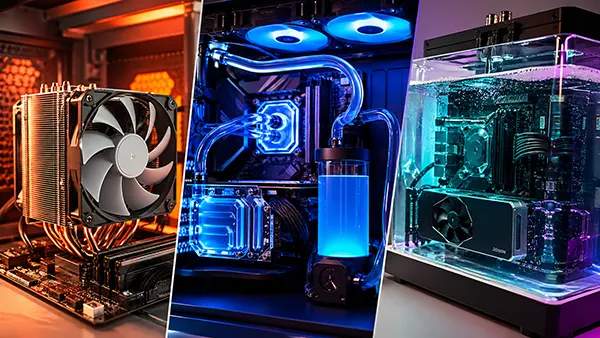
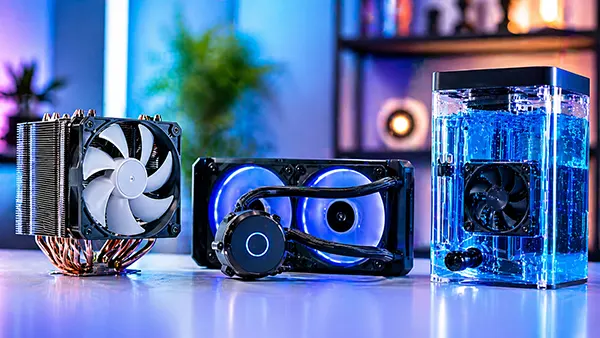
Air cooling remains the most widely used solution due to its simplicity, reliability and accessibility. Modern air coolers have evolved significantly, featuring advanced heat pipe designs, improved fin density and highly efficient fans. In well-ventilated cases, premium air coolers are capable of handling most gaming and productivity workloads without instability.
Despite these improvements, air cooling is approaching its practical limits. High-end processors in 2026 can easily exceed thermal thresholds during sustained workloads such as rendering, AI tasks or intensive simulations. Under these conditions, even top-tier air coolers may struggle to prevent temperature spikes and performance throttling.
Noise is another factor to consider. While modern fans are more efficient than ever, maintaining lower temperatures often requires higher RPM levels. This can result in noticeable noise, particularly in compact builds where airflow is restricted and heat accumulates more quickly.
Where Air Cooling Still Holds Value
Air cooling remains a sensible choice for users who prioritise stability and low maintenance. It performs reliably in mid-range and upper-mid systems where extreme overclocking is not required. For everyday computing, gaming and moderate workloads, it delivers consistent results without added complexity.
Cost efficiency also plays a significant role. Compared to liquid and immersion solutions, air cooling offers strong performance per pound spent. This makes it an attractive option for builders who want dependable cooling without investing heavily in additional components.
Long-term durability further strengthens its position. With no pumps or liquid involved, the risk of mechanical failure is reduced. Apart from occasional fan replacement, air cooling systems require minimal attention over their lifespan.
Liquid Cooling: Balanced Performance for Demanding Systems
Liquid cooling has become the standard for high-performance PCs, particularly in enthusiast builds and professional workstations. Both all-in-one units and custom loops provide more efficient heat transfer compared to air cooling, making them suitable for modern processors that operate close to their thermal limits.
The key advantage lies in the use of liquid as a heat transfer medium. It absorbs heat quickly and moves it away from critical components towards radiators, where it can be dissipated more effectively. This results in lower operating temperatures and improved stability during prolonged workloads.
In 2026, liquid cooling systems have become more refined. Intelligent control software allows for dynamic adjustment of pump speed and fan curves, ensuring that the system responds efficiently to changing thermal conditions. This helps maintain a balance between cooling performance and acoustic comfort.
Advantages and Limitations of Liquid Cooling
Liquid cooling excels under sustained load conditions. It allows CPUs and GPUs to maintain higher boost clocks for longer periods, which directly translates into better performance in demanding tasks such as video production, 3D rendering and machine learning.
At the same time, it introduces additional complexity. Installation can be more involved, especially for custom loops, and proper setup is essential to avoid issues. Although rare, leaks remain a potential risk, requiring careful assembly and periodic inspection.
Cost is another important consideration. While entry-level liquid coolers are relatively affordable, high-end configurations can be expensive. However, for users seeking maximum performance and quieter operation under load, the investment often proves justified.
Immersion Cooling: High Efficiency with Limited Practical Use
Immersion cooling represents the most advanced approach among the three. It involves submerging PC components in a specialised non-conductive fluid that absorbs and dissipates heat far more effectively than air or traditional liquid systems. This method eliminates hotspots and ensures even temperature distribution across all hardware.
In controlled environments, immersion cooling delivers exceptional results. Systems can operate at consistently low temperatures even under extreme workloads, which significantly reduces thermal stress and can extend component lifespan. This makes it particularly relevant for data centres and specialised high-performance setups.
However, its application in home systems remains limited. The process requires dedicated equipment, compatible components and careful handling of fluids. It is not yet a plug-and-play solution for the average user building a personal computer.
Real-World Viability of Immersion Cooling in 2026
For typical users, immersion cooling is still more experimental than practical. Its benefits are most evident in scenarios involving constant heavy workloads, where maintaining low temperatures directly impacts efficiency and operational stability.
Practical challenges continue to limit its adoption. High initial costs, maintenance complexity and the difficulty of upgrading components make it less convenient than traditional cooling methods. Even simple hardware changes require additional steps compared to standard systems.
That said, the technology is evolving. As manufacturers refine designs and reduce costs, immersion cooling may gradually become more accessible. In the future, it could play a larger role in high-end enthusiast builds, particularly as hardware continues to demand more efficient thermal solutions.